Table of Contents: How Much Water Does It Take to Make a Hamburger?
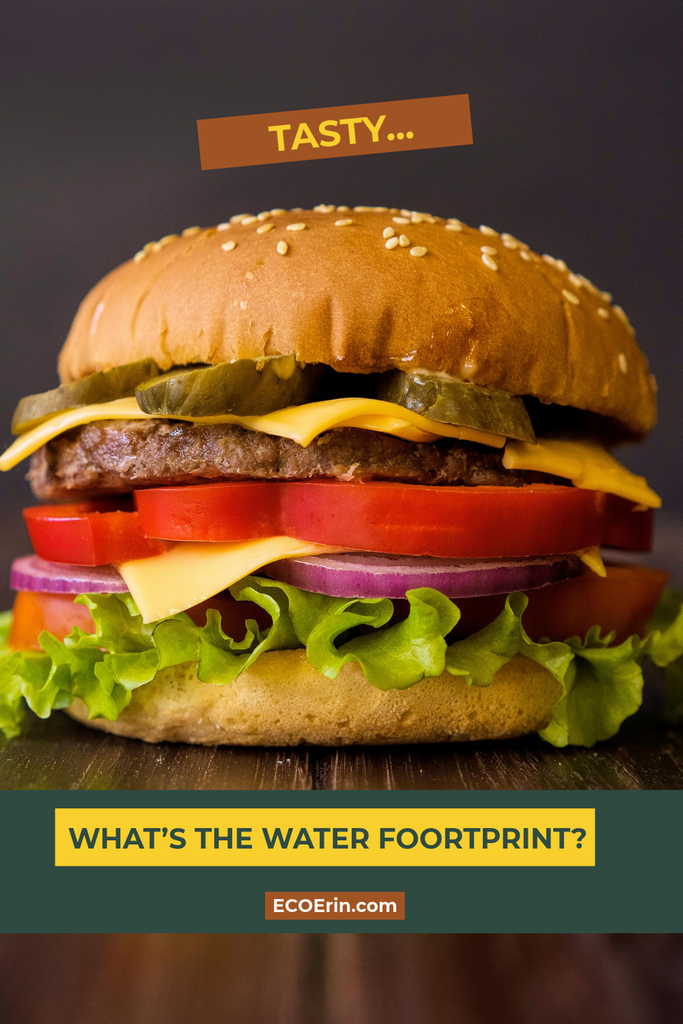
How much water does it take to make a hamburger? About 1,750 litres. That’s about 460 US gallons for one quarter-pound burger patty.
That number sounds high to you, right? It did to me as well when I first found this out. I have spent 15 years working in food and also some time as the Conservation Manager at California Water Service and I did a double take the first time I saw how high that number seems to be.
Where does all that water go? I will show you where it comes from, why it’s not quite as simple as one number, and the swap that saves most of it. Without giving up burgers.
I grew up in the Midwest, lot’s of meat and potatoes growing up as a staple in our household. I understand how ingrained meat and dairy are in our society. Working in the dairy industry for over 10 years in my food career, I made the switch to more whole foods, plant-based organizations like Greenleaf Foods and started incorporating a more plant-based/blue zones diet. My children and I aim for an 80/20 plant-based type of eating, and that is exactly why this swap works for us. It’s not all or nothing. If my son, Jackson, goes to a birthday party, the first thing he goes for is the salad, he will also go for the pizza. During the week we focus on plant-forward foods and on the weekends (since birthday parties and events can be so heavily-geared towards animal agriculture), we typically use that as our 20% and some lunches during the week.
Affiliate disclosure: I may earn a small commission if you buy through these links, at no extra cost to you. See my full Affiliate Disclosure.

Where the 1,750 litres comes from
The figure is a global average from Mekonnen & Hoekstra (2012), A Global Assessment of the Water Footprint of Farm Animal Products, Ecosystems 15, 401–415. Beef is 15,415 litres per kilogram. A quarter-pound patty is 113 grams. 113 g × 15,415 L/kg ÷ 1,000 = about 1,750 litres.
That is not the water in the burger, it’s the water it took to produce it. Of course, that water isn’t sitting inside the patty, it’s all the water required to raise and process the cow. Most of it goes into irrigating the corn, soy, and grass the cow eats, followed by the water the animal drinks, farm upkeep, and finally processing and packaging.
Beef is the outlier on every water chart. For comparison, from the same source (Mekonnen & Hoekstra 2012, global averages):
- Pork: 5,988 L/kg. A 100 g pork chop is about 600 litres.
- Chicken: 4,325 L/kg. A 100 g chicken breast is about 433 litres.
- Lentils, beans and chickpeas: 4,055 L/kg. 100 g dry lentils is about 406 litres.
Lentils look high per kilogram, until you count protein. Per gram of protein lentils use far less water than any meat. That is the detail most lists leave out. Pound for pound on your plate, you eat a bigger scoop of cooked lentils to get the same 25 or 30 grams of protein. But even when you match them gram-for-gram of protein, chicken still takes about 1.5x more water than lentils, and beef takes 6x more because we have to grow tons of irrigated feed just to raise the animal. Both are packed with potassium and protein, and while chicken has more B vitamins like B6 and B12, lentils bring way more folate and fiber to the table, with about 60% less saturated fat and zero cholesterol.
Why the number varies
Beef’s footprint varies by production system and region. A feedlot cow in an irrigated region uses a lot more water than pasture-raised cattle in a rainy climate, so think of a global average as a good ballpark rather than an exact number for the burger on your plate.
If a source gives you a single beef number with no source, no year and no scope, it’s something you will want to double check. The honest version is: about 1,750 litres per quarter-pound patty, global average, Mekonnen & Hoekstra 2012. Now I know what you’re thinking about this outdated source timing from 2012 but this is the best source data out there based on the studies that are done for water.
The swap (no guilt required)
You don’t have to stop eating burgers. Swap beef for lentils or beans once or twice a week, and you save roughly 1,290 litres per patty (1,750 L beef minus about 460 L for the same weight of dry lentils, (Mekonnen & Hoekstra 2012).
I love my vegan chili if you really want to get your protein in there. Grated tofu with all the beans and vegetables, it’s very hearty. It’s the one I make when I want something filling and I do not want to think about it. I call it the best vegan chili of your life, and I mean it. Here’s the recipe!
Other easy swaps: a lentil taco night, a bean burger, or a chicken burger instead of beef (433 L vs 1,750 L per 100 g serving).
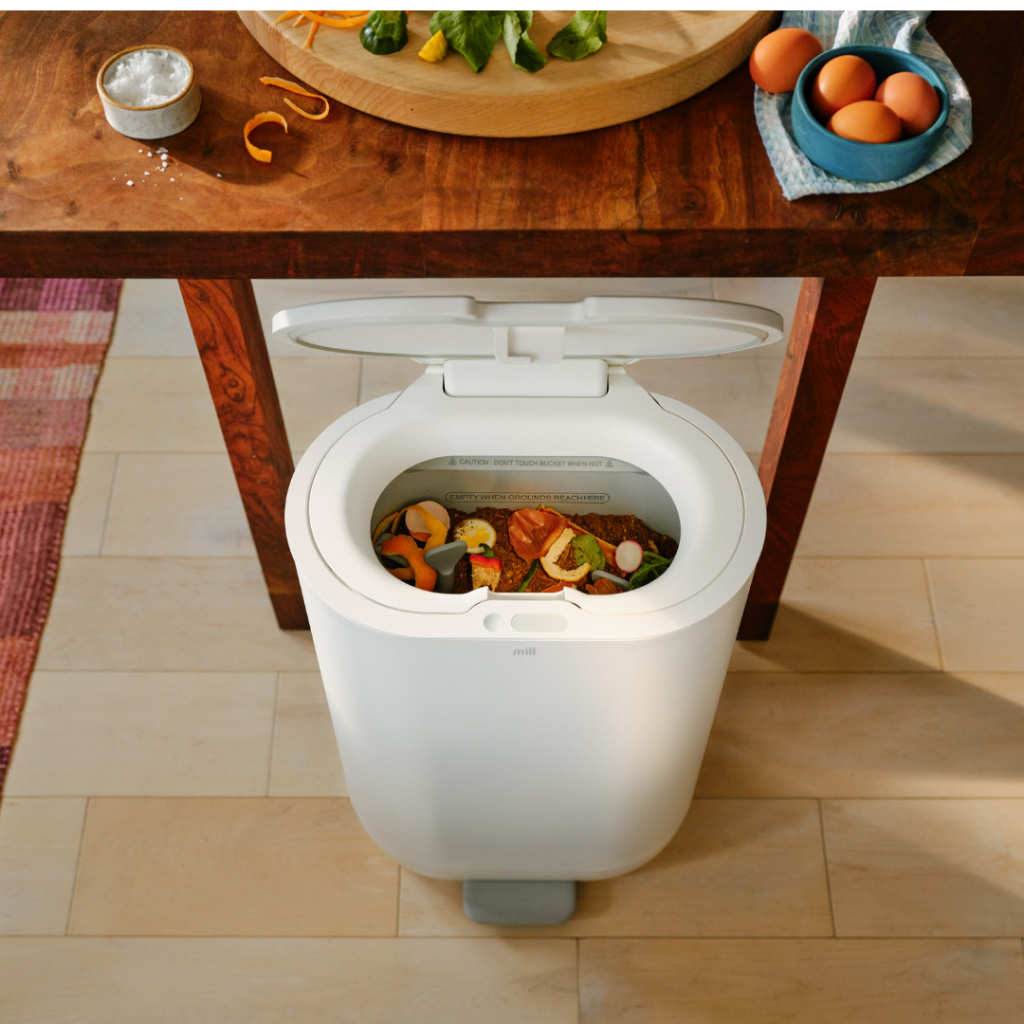
The food you throw away is water thrown away too. Plan the meal, store the leftovers, and compost the scraps. I use a Bokashi kit for our van because space is small. At home, we compost with our city, but the Mill is a wonderful indoor compost machine you can use if your city doesn’t provide compost pickup. It’s beautiful, sleek design matches all the aesthetics of a wonderful kitchen. You run it at night while you sleep, it goes on the floor and is too big to go on your counter top. I like this compost because it grinds up everything even all the meat and bones that can make composting challenging outside. One quick heads-up: Mill doesn’t technically make finished compost, it dries and grinds your scraps into odor-free ‘food grounds.’ From there, you just mix a little bit into your garden soil as a slow-release fertilizer or toss the grounds straight into your outdoor compost bin to finish breaking down. If you want the convenience of a compost machine that can sit on your countertop, you should check out the Foodcycler. If you want to avoid smelly bins, trips outside, pests, and more chores this is a simple composter. It accepts bones, meat, and dairy but you do have a limit on how much you can put in based on it’s size.
Pick 2-3 swaps. Don’t try to overhaul everything at once. And if anyone asks how much water does it take to make a hamburger, now you know the answer: about 1,750 litres.
Try it yourself
Add up your own day on my Save Water at Home hub. The calculator there adds up a normal day of food, drink and clothes, in litres and gallons, and shows you the one swap that saves the most.
Sources: Mekonnen & Hoekstra (2012), Ecosystems 15, 401–415; Water Footprint Network Product Gallery: https://www.waterfootprint.org/resources/interactive-tools/product-gallery/ ; USGS Water Science School, https://water.usgs.gov/edu/activity-watercontent.php
FAQ: How Much water does it take to make a hamburger?
How much water does it take to make one hamburger?
On average, it takes about 1,750 liters (roughly 460 gallons) of water to produce a single quarter-pound (113 g) beef patty, based on global water footprint data from Mekonnen & Hoekstra. Nearly all of that water goes toward growing the crops and pasture used to feed the cattle over their lifespan.
Does that mean 1,750 liters of tap water is wasted every time I eat a burger?
Not exactly. Water footprints include three types of water: green water (rainwater stored in soil that grows grass and feed crops), blue water (surface and groundwater used for irrigation and drinking), and grey water (freshwater needed to dilute agricultural runoff). While much of beef’s footprint is rainwater on pastureland, beef still requires far more irrigated “blue” water than plant proteins or poultry.
Why does grass-fed beef sometimes have a different water footprint than grain-fed beef? .
Grass-fed cattle often rely more on rain-fed pasture (“green water”) and less on irrigated corn and soy (“blue water”). However, because grass-fed cattle take longer to reach market weight, their total lifetime water footprint can still be high, making the region where the cattle are raised just as important as what they eat.
Are lentils actually better for water conservation if you have to eat more of them to get enough protein?
Yes. Even though cooked lentils absorb water on the stove, meaning you eat a larger portion on your plate to match the protein in a chicken breast. Lentils still require about 1.5 times less water per gram of protein than chicken and 6 times less water per gram of protein than beef.
What is the easiest burger swap if my family isn’t fully plant-based?
You don’t have to cut out beef completely to make a meaningful dent. Swapping just one or two beef dinners a week for lentil tacos, black bean burgers, or a tofu-and-bean chili, or even trading a beef patty for a chicken burger cuts your meal’s water footprint by 75% to 80%