
Table of Contents: Zero-Waste Burning Man Packing List
Disclaimer: This post may contain affiliate links, meaning I may earn a small commission at no extra cost to you if you purchase through them. I only recommend products I genuinely use and love.

I hope this zero-waste Burning Man packing list is helpful for our burn. When I started reading Burning Man’s official Leave No Trace guidance, I realized it’s basically the most extreme version of the zero-waste packing list we’ve been building for my own family’s van trips for years. Burning Man’s rule is pretty clear: there is no garbage service in Black Rock City. Nothing. Whatever you bring in, you personally carry back out, including your greywater. The organizers publish an actual list of items they ask people not to bring at all, because they shed MOOP (Matter Out of Place) too easily: glitter, feathers, sequins, artificial turf, styrofoam coolers, hay, straw, loose gravel. Every one of those items becomes near-impossible to fully recover once it hits sand.
Reading that list, I realized most of it maps directly onto swaps I already recommend for entirely different reasons, not because they’re trendy, but because they hold up under real use. When I think about packing for a week in the desert, every single item needs I bring needs to have a purpose, it really helps you do an “edit” on what belongings are needed in your life and what’s not. A comprehensive zero-waste packing list goes beyond the basics; it transforms how you manage your resources when municipal infrastructure completely vanishes.
Here is a structured master checklist and deeper dive into rounding out this zero-waste burning packing list with absolute intention:
The Non-Negotiable Zero-Waste Burning Man Packing List
- Reusable Water Containment: Rigid, 5-gallon blue aquatainers or insulated stainless steel dispensers. Ditch single-use plastic bottles entirely, they are banned from retail sale on the playa anyway and create instant MOOP hazards.
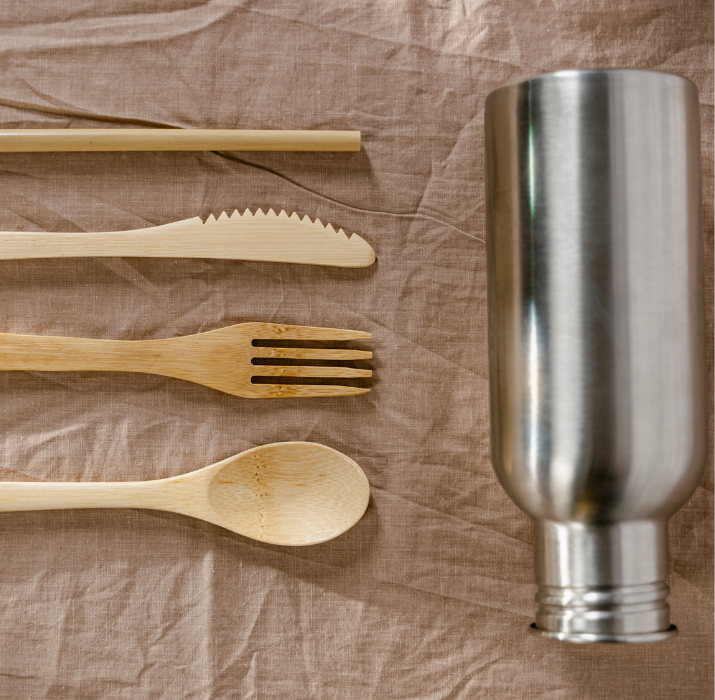
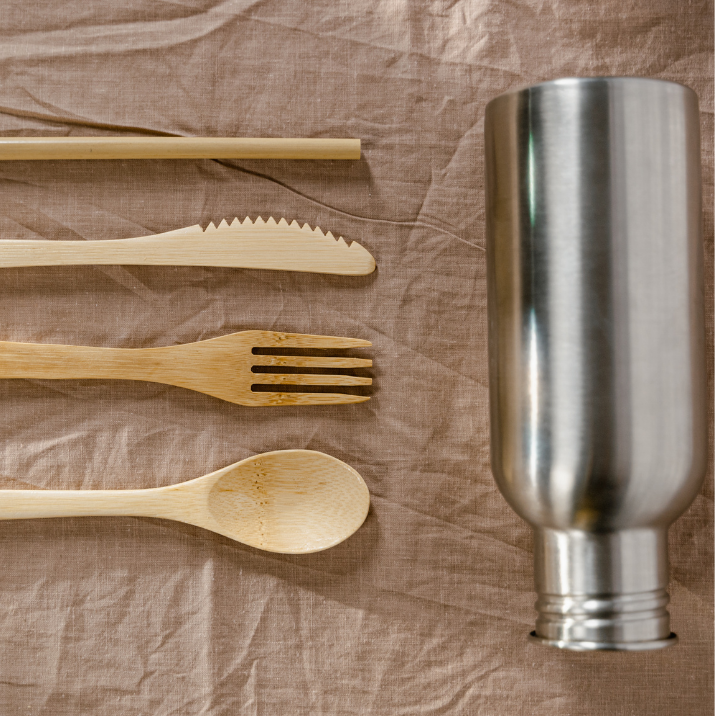
- Closed-Loop Kitchen & Dining Gear: Hard-anodized aluminum or stainless steel plates, heavy-duty sporks, and insulated mugs. Leave paper plates, plastic cutlery, and disposable cups at home.
- Cloth & Silicone Alternatives: Beeswax wraps, cloth napkins, and reusable silicone food storage bags instead of single-use plastic baggies or plastic wrap that shred in the wind. I love the beeswax wraps and cloth napkins from Mieco.
- Structural Anchors & Rebar: 12-to-18-inch lengths of thick rebar driven deep into the ground, topped with brightly colored tennis balls, plastic caps, or glow markers to prevent ankle injuries.
- Commercial-Grade Shade Cloth: Knitted, breathable black or silver shade cloth rather than cheap plastic blue tarps that shred into unrecoverable ribbons during windstorms.
- Respiratory & Dust Protection: Reusable half-mask respirators with P100 particulate filters for whiteout storms, alongside airtight ammo cans or silicone bins for sensitive electronics.
- Biodegradable Personal Care: Bulk, plant-based, true biodegradable liquid soaps in reusable pump bottles, paired with a bundle of soft cotton washcloths instead of disposable wet wipes.
- Heavy-duty solar gear: Buy once & you might spend more upfront but good, reliable products like Jackery are much more worth it in the long run. When you power your trip, when you can purchase a good solar panel that you can keep for years, this is the way to go.
Zero-Waste Burning Man Packing List: Hydration, Greywater, and Sanitation Systems
In Black Rock City, water is life, but managing what happens after you use it is where most people fail.
- The Five-Gallon Jug Standard: Transitioning away from individual bottles protects the desert from accidental plastic litter and simplifies your camp footprint. A few heavy-duty containers take up less trunk space than dozens of cases of single-use bottles.
- Evaporative Greywater Pits vs. Sealed Containment: Because greywater (water from washing dishes, teeth, or sponge baths) cannot legally hit the open playa surface, you need a closed-loop system. Use a simple PVC and bucket setup with a strainer to catch food particles, and store your greywater in sealed jerry cans for proper disposal off-playa.
- Eco-Friendly Hygiene Refills: Bringing bulk containers prevents half-empty travel bottles from littering your packing bins or ending up in camp trash cans.
Zero-Waste Burning Man Packing List: Advanced Camp Infrastructure & Shelter Integrity
High winds will test everything you bring to Burning Man. Cheap plastic gear fails within forty-eight hours, turning into dangerous flying debris.
- Rebar and Rebar Caps: Flimsy tent stakes pull straight out of the hardpan earth in a high-speed desert storm. Thick rebar anchors your infrastructure securely while bright caps make hazard zones visible at night.
- Heavy-Duty Tarping: Traditional blue tarps degrade rapidly under UV exposure and high winds. Knitted shade cloth allows airflow, significantly reducing the risk of your shade structure catching air and taking flight.
- Dust Mitigation Gear: Fine alkaline dust gets into everything. Keeping cameras, chargers, and phones sealed in airtight containers preserves your gear for future trips instead of forcing you to throw away ruined electronics.
Zero-Waste Burning Man Packing List: The Kitchen & Meal Prep Protocol
Cooking for yourself or a small camp in a resource-scarce environment requires strict inventory control to eliminate food waste before it happens.
- Pre-Chopped and Dehydrated Staples: Prep your meals at home. Chop vegetables, pre-portion proteins, and vacuum-seal or freeze them in reusable silicone bags. This drastically cuts down on kitchen prep waste (like onion skins, packaging, and vegetable scraps) that you would otherwise have to manage and pack out.
- Zero-Waste Cleanup: Pack a dedicated camp kit featuring hard-anodized aluminum or stainless steel plates, sporks, and insulated mugs that can handle high heat and wipe clean easily with a damp microfiber cloth, saving precious water.
- Composting: There are Composting camps and recycling camps you can bring your compost and cans to but if you want to do your own composting I recommend the Bokashi composting. This composting has no smell, is an amazing small space living resource so that you can responsibly process your food scraps. It’s an anaerobic fermentation method that fits seamlessly into a mobile, small-space setup. Unlike traditional composting that relies on oxygen and worms, Bokashi uses inoculated bran (loaded with effective microorganisms) to pickle and ferment food scraps, including citrus, meat, and dairy that would ruin a traditional bin. Managing food waste in a place with zero municipal trash infrastructure or municipal composting is one of the ultimate tests of radical self-reliance. On the playa, traditional aerobic composting is nearly impossible, it takes up too much space, attracts pests in the desert heat, and requires moisture levels that don’t survive a dry lakebed.
Zero-Waste Burning Man Packing List: Gear & Apparel Checklist
- Natural-Fiber Clothing: Lightweight, breathable linen, organic cotton, or hemp garments that protect against the sun without shedding microplastics or synthetic fibers into the desert wind.
- Heavy-Duty Safety Pins & Industrial Clips: A large assortment of heavy-duty safety pins, bulldog clips, and tarp clamps to secure loose fabric, costume elements, and camp banners against high-velocity gusts.
- Dust-Resistant Footwear: Broken-in leather boots or high-top sneakers paired with breathable gaiters to seal out alkaline dust from your ankles and socks.
- Shed-Proof Costuming: Intentionally curated outfits free of glitter, loose feathers, faux-fur shreds, sequins, or paper confetti that instantly violates Leave No Trace principles.
- Nighttime Illumination & EL Wire: Reusable LED string lights, headlamps, and electroluminescent (EL) wire powered by rechargeable battery packs to keep yourself visible to mutant vehicles during whiteout night conditions.
Core Principles Worth Bringing Home
- Reusable over disposable: In a desert environment where every container you bring has to survive a week of dust, heat, and pressure changes, disposable plastic isn’t just wasteful, it’s a liability, and it’s more likely to crack and become the exact kind of MOOP the site is trying to prevent.
- Cloth over single-use: Beeswax wraps, cloth napkins, and reusable produce-style bags aren’t just kitchen swaps. They’re genuinely better suited to a week in the desert than their plastic equivalents because they don’t shred, they don’t blow away as easily, and they pack down small. I love the beeswax wraps and cloth napkins from Mieco.
- Secured over loose: A huge amount of MOOP at Burning Man isn’t intentional litter, it’s stuff that simply blew away because it wasn’t secured. Feathers, glitter, loose fabric. The organizers’ guidance literally says: don’t bring anything you can’t keep tied down. That’s a genuinely useful mental model for packing anywhere outdoors, not just the playa.
- Natural materials, intentionally: Look-good synthetic costume pieces, sequins, fake fur, and glitter are consistently flagged as the worst offenders for shedding microscopic debris that’s nearly impossible to fully clean up. It’s the same logic behind why I steer people away from synthetic fabrics that shed microplastics in the wash at home.
When your packing list is filtered through a true zero-waste lens, you stop viewing gear as disposable utility and start seeing it as permanent infrastructure. Every item you choose either protects the desert ecosystem or adds to its burden, there is no middle ground. A good way to look at this is not only in burning man leave no trace but how can you leave no trace in your own life? How do you want to pack for this Burning Man trip?
Ready to live more eco-frienldy & more mindful of your footprint? Visit my Shop Page to see my vetted eco-favorites.
- Looking for a way to compost in small spaces? Check out my Bokashi Composting For Small Spaces article to help you get started.
- Check out my tips for Zero Waste Living For Small Spaces to reduce your carbon footprint and lighten your load.
- Check out my High Protein Tofu Scramle recipe for simple meals you can make on the playa or everyday.
I would love to hear from you. What’s the first thing you will pack for Burning Man? Let’s practice Burning Man Leave No Trace together!
FAQ: Zero-Waste Burning Man Packing List
Is Burning Man actually sustainable?
Not in the traditional sense, given the massive short-term carbon footprint generated by travel, generators, and art burns. However, when evaluated through an accountability and social responsibility lens, the event stands out for publishing a specific 2030 carbon-negative roadmap, operating the largest Leave No Trace program in the world, inspiring +75,000 attendees to put sustainability first and leave no trace, and pioneering rigorous, community-led waste and composting systems.
What is Burning Man’s carbon footprint?
Macroeconomic estimates suggest the event produces roughly 100,000 metric tons of CO2 across its single-week duration, heavily driven by participant travel, flights, and RV transport. While official on-playa fossil fuel inventories (like power generators and art burns) track a smaller direct footprint, travel remains the heaviest environmental factor.
How does Burning Man handle waste management?
Under its strict Leave No Trace policy enforced by the Bureau of Land Management, attendees are required to pack out everything they bring onto the desert. The site must pass a post-event inspection requiring less than one square foot of debris per acre. Additionally, communities utilize creative camp-level solutions like Bokashi composting to manage food waste where traditional municipal infrastructure doesn’t exist.
What are the biggest unresolved environmental challenges at Burning Man?
The biggest ongoing challenges include the carbon emissions tied to large-scale art burns and the high-impact travel footprint of tens of thousands of global attendees. Additionally, lag bolts, small metal screws used for shade structures and art installations, are consistently named by the event’s restoration team as the most persistent source of leftover debris.

Leave a Comment