
Is Burning Man Sustainability Focused?
Disclaimer: This post may contain affiliate links, meaning I may earn a small commission at no extra cost to you if you purchase through them. I only recommend products I genuinely use and love.
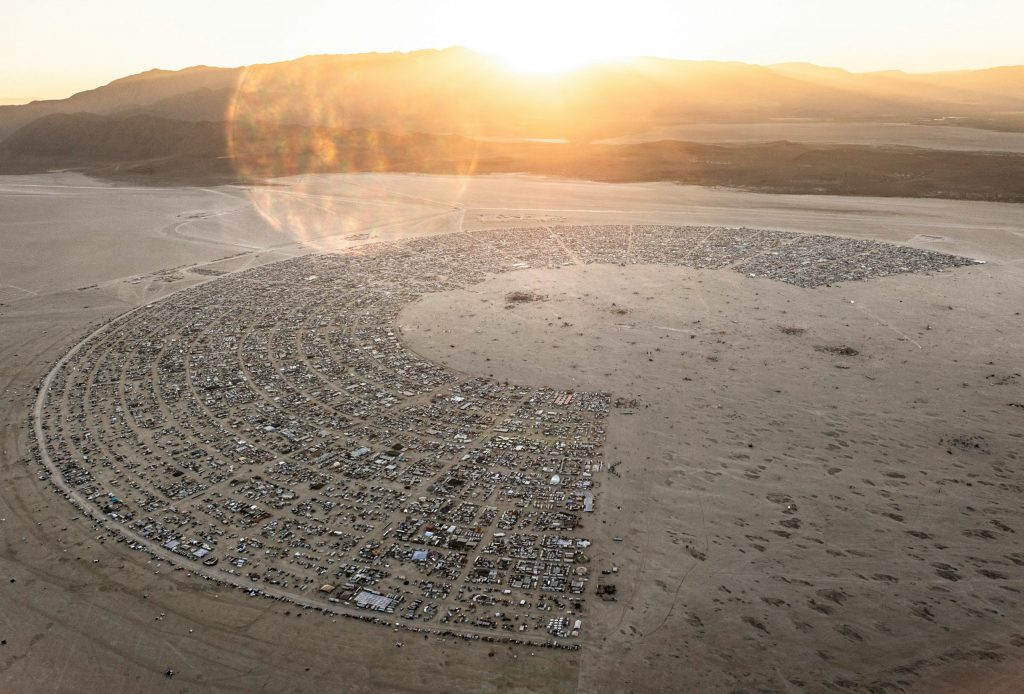
Table of Contents
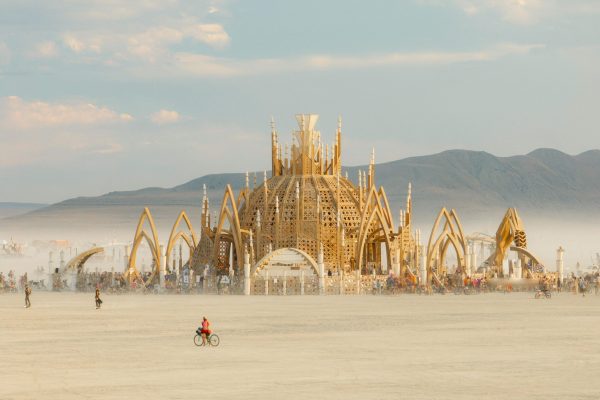
Is Burning Man Sustainability focused? In 2010 I had never been to Burning Man so really had no idea until I was letting my friend Rachel crash on my couch for six months after having first moved to California. Her sister was so grateful for my generosity that she offered me a ticket to Burning Man. Burning Man, what is that? I had no idea what it even was so I dug in deep on researching this event to find out more. I read the survival guide, scoured the internet, and started talking to people about this crazy but exhilarating festival.
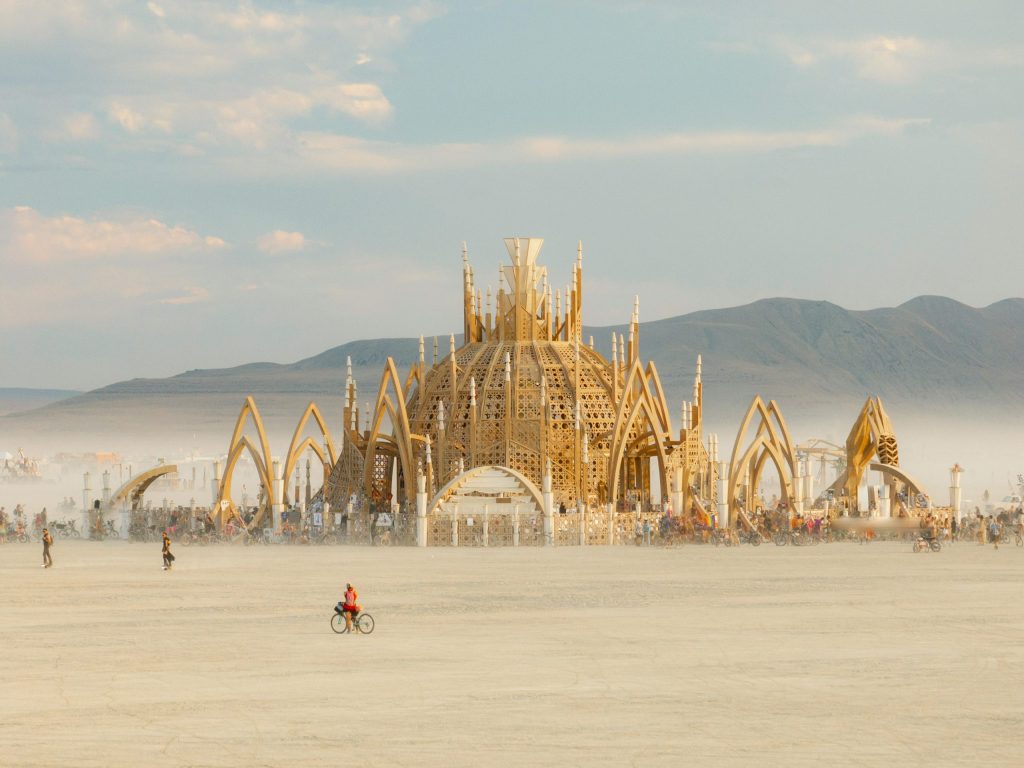
Burning Man has 10 principles but at its core, Burning Man runs on ten foundational principles ranging from radical inclusion and decommodification to civic responsibility, participation, and Leave No Trace. While they were written for a temporary desert city, they read almost like a blueprint for intentional living: a demand that you show up, pay attention, and take full responsibility for the space you occupy and the waste you leave behind. At that point in my life, I had never packed out my own greywater in a jug, never had to focus on my Moop (matter out of place), but I’ve spent much of my career elbow-deep in how households handle food, water, and waste, and when I researching wether or not I would participate I fell into a genuine rabbit hole reading about Burning Man’s MOOP and it rearranged how I think about my own kitchen trash can. I made the decision to go in 2010 and this was the year I met my husband, Kevin. We met on the playa at Burning Man on a ladybug art car. I had originally planned to just go for four days because I didn’t know how I was going to handle the heat and being in the desert for so long but I realized so much about myself through my experiences at Burning Man, and had met my match that I called my parents from a phone booth in the middle of the desert to tell them that I was having an unbelievable experience and planning on staying until the end of the festival. That experience changed me forever. We tried to go back for the following years after but life just got too busy and timing wasn’t right. It was on our ten year wedding anniversary that we decided to go back & we have now been going back annually ever since. It’s a great place to disconnect and reconnect with yourself again, be non-reliant on technology, and go inside to find your strengths and pillars.
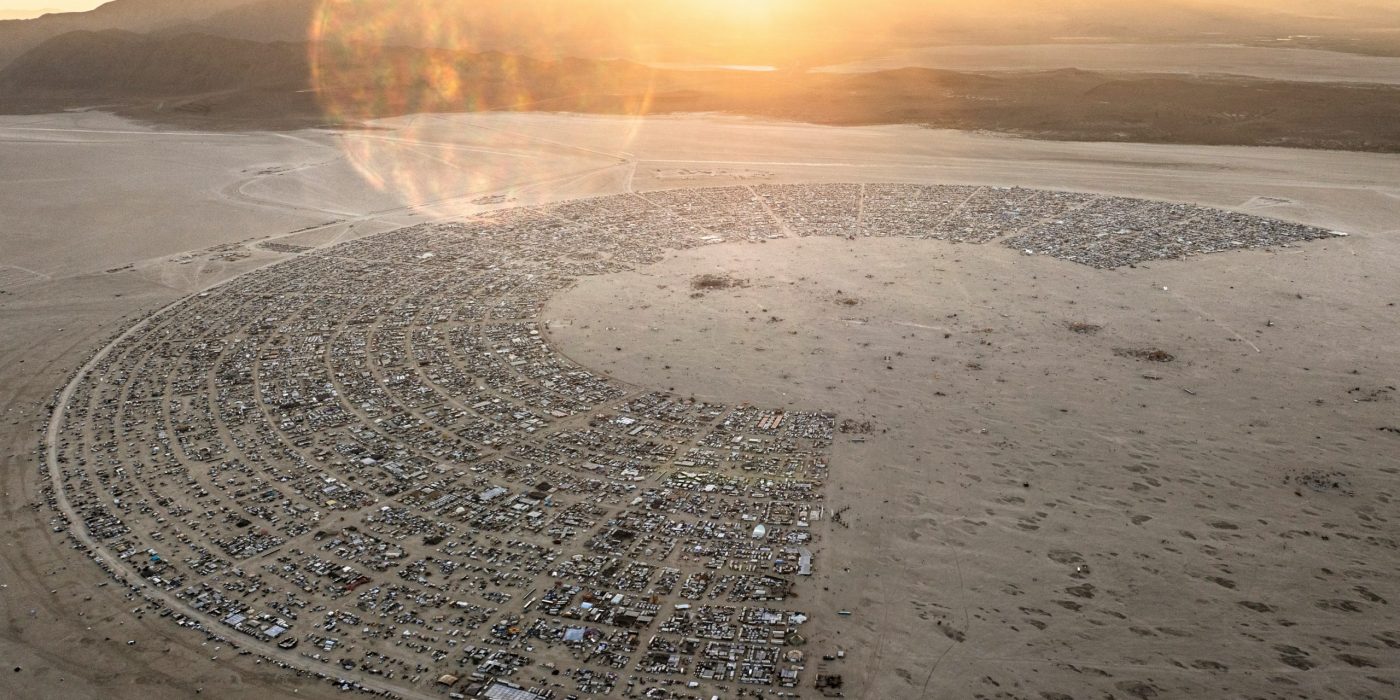
For anyone who hasn’t heard the term: MOOP stands for Matter Out of Place. It’s Burning Man’s word for anything left behind on the playa after the event, for example a bottle cap, a zip tie, a sequin, a screw. Every year, a restoration crew of around 150 people lines up shoulder to shoulder and walks the entire 3,800-acre site, square foot by square foot, logging everything they find. The result is a color-coded map: green where the ground came back clean, yellow where it took extra time, red where crews had to stop and dig.
What stopped me cold wasn’t the scale of it. It was the specific culprit. For three years running, the single worst MOOP offender hasn’t been glitter or plastic cups or cigarette butts, it’s been lag bolts. Small metal screws, used to build shade structures and art installations, left behind in the desert by the thousands. Not because anyone meant to litter. Because a small, boring, unglamorous piece of hardware is easy to lose track of when you’re focused on the big, beautiful thing you built around it.

That’s the part that stuck with me. I’ve spent years swapping cleaning products, water bottles, mattresses, the big, visible decisions. But the actual waste in most of our homes isn’t always the big decision. It’s the small, boring thing we stopped tracking. The produce bag that gets used once and tossed because we forgot the reusable ones were in the car. The takeout container we meant to wash and reuse but didn’t. Our own version of the lag bolt.
Burning Man’s Leave No Trace principle is built on a phrase I think about constantly now: pack it in, pack it out. Not “recycle what’s convenient.” Not “compost when you remember.” Everything you bring, you’re responsible for removing, no exceptions, no garbage service to blame it on. It’s the same principle behind the zero-waste kitchen setup I’ve written about before, just scaled up to 80,000 people and a literal desert. When there’s no one coming to take your trash away, you actually look at what you’re generating. Most of us never do that at home, because someone always comes to take it away.
The other thing that surprised me: Burning Man now runs a genuine sustainability infrastructure most people don’t associate with the event, a Green Theme Camp Community with working groups for power, waste, water, shelter, transportation, and food, plus a playa-wide compost program and a green-camp rating system called BLAST. It’s not perfect, the event has real, acknowledged problems with carbon emissions from generators and the burns themselves, and they’ve said so publicly as part of a 2030 roadmap to go carbon negative. But the honesty of publishing your own worst MOOP offender by name, three years running, is the kind of accountability I wish more brands (including plenty in the “eco” space) were willing to show.

I keep a small dish by my kitchen sink now, not for anything dramatic, just the small stuff that used to slip past me. A twist tie. A stray bread clip. A rubber band. My own tiny MOOP Map. It’s not going to save the planet by itself. But it’s changed how I notice what leaves my house without my permission.
Beyond individual accountability, Burning Man has quietly evolved a sophisticated backend for environmental management known as the Green Theme Camp Community. Powered by networks like the Burner Leadership Achieving Sustainable Camps (BLAST), this infrastructure tackles the massive logistical footprint of a temporary city through organized working groups dedicated to power, waste, water, shelter, transportation, and food.
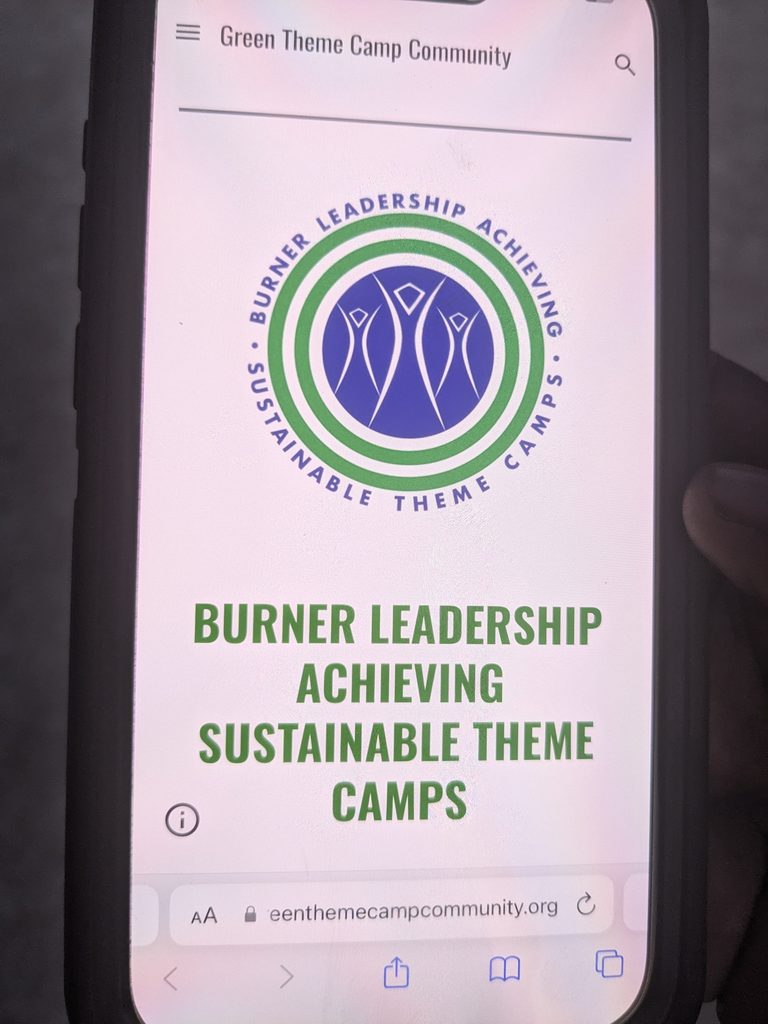
Instead of leaving sustainability entirely up to individual whim, Green Theme Camps commit to specific operational standards, such as switching from diesel generators to solar micro-grids, implementing strict greywater evaporation systems, and organizing camp-wide composting protocols. The BLAST rating system acts as a peer-reviewed benchmark, evaluating camps on how successfully they reduce, reuse, and recycle their resources on the playa.
It’s a fascinating parallel to corporate sustainability and supply chain logistics. While the event still faces valid criticisms over its overall carbon footprint, particularly regarding transport and large-scale art burns, which management has directly addressed in their 2030 carbon-negative roadmap, the existence of a self-policing ecological infrastructure proves that even the most chaotic, anarchic spaces can organize around rigorous environmental stewardship when the community decides it matters.

If you’re building your own zero-waste habits at home, I’ve written a full walkthrough of the kitchen and bathroom swaps that actually reduced our household trash to less than one bag a week, you can find that in my Zero Waste Living Guide for Small Spaces. And if composting feels intimidating, the Bokashi method is the exact “no backyard required” system that made it click for me. Managing food waste in a place with zero municipal trash infrastructure or municipal composting is one of the ultimate tests of radical self-reliance. On the playa, traditional aerobic composting is nearly impossible, it takes up too much space, attracts pests in the desert heat, and requires moisture levels that don’t survive a dry lakebed.
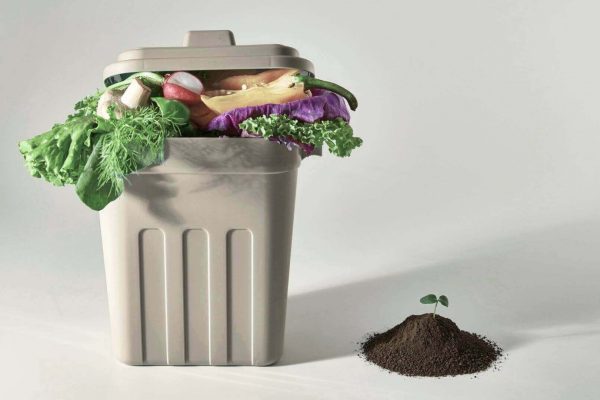
That is exactly why camp-level composting can include Bokashi composting, an anaerobic fermentation method that fits seamlessly into a mobile, small-space setup. Unlike traditional composting that relies on oxygen and worms, Bokashi uses inoculated bran (loaded with effective microorganisms) to pickle and ferment food scraps, including citrus, meat, and dairy that would ruin a traditional bin.
In a van, an apartment, or a remote desert camp, a sealed Bokashi bucket takes up minimal floor space, produces zero odor, and breaks down food scraps into a pre-compost state that can be easily packed out in a sealed container without leaking or attracting pests. It’s the exact kind of closed-loop system that proves sustainable habits don’t require a sprawling backyard or a green city infrastructure to work, just the right tool for the environment.
Conclusion
At the end of the day, looking at Burning Man through an environmental lens is a paradox. It is a massive temporary city built in a fragile desert, carrying a real, acknowledged carbon footprint from the very transport and art that bring it to life. But it is also a living laboratory for radical self-reliance, where tens of thousands of people practice a level of intense, community-led waste tracking, solar adoption, and closed-loop composting that most modern cities only dream of.
Perfection isn’t the reality here. You will always find people who fall short, leave gear behind, or miss the mark. But when you step into the arena instead of standing on the sidelines complaining about the state of the world, you realize something vital: culture isn’t handed down to us, it’s built by the choices we make when no one is watching.
Whether it’s managing a tiny dish of stray household MOOP by your sink, rethinking your food waste with a simple Bokashi bucket, or joining forces to build a more sustainable future, true impact starts small. We don’t need a sprawling green infrastructure or a perfect blueprint to begin; we just need the willingness to pack out what we bring, care for our spaces, and show up for the planet together.
FAQ: Burning Man Sustainability
What does MOOP stand for?
MOOP stands for Matter Out of Place. It’s the official Burning Man term for any litter, debris, or foreign material left behind on the desert playa, ranging from large items like abandoned tents and lag bolts down to stray sequins, bottle caps, and cigarette butts.
Burning Man sustainability: Is it actually environmentally-friendly?
In order to look at Burning Man with a sustainability lens you need to look at the big picture of the event. On one hand, the event generates a massive carbon footprint through transport and large-scale art burns, which the organization has openly acknowledged in its 2030 carbon-negative roadmap. On the other hand, its “Leave No Trace” ethos and the Green Theme Camp Community (BLAST) have pioneered rigorous, community-led waste, solar, and composting infrastructures that rival professional eco-initiatives. Now don’t get me wrong, you will always find individuals who fall short, people who ignore the principles, abandon their gear, or treat the desert like a temporary playground rather than a fragile ecosystem. Perfection isn’t the reality here. But at the end of the day, I wanted to go to Burning Man because you can either stand on the sidelines complaining about the state of the world, or you can step into the arena and decide to be part of the solution. When you witness tens of thousands of people channeling raw passion into protecting the earth, taking responsibility for the trash we create, focusing on relationships instead of monetary-driving incentives, or disconnecting from technology to focus inwards, it’s nothing short of inspiring. It reminds me that culture isn’t always handed down to us, it’s built by the choices we make when no one is watching. So long story short, I believe the value of community-led action, deep accountability, and shared culture provide the inspiration that’s needed to help in the largest picture of protecting this planet. We need teamwork, community building, and action for true sustainability and to help the human race.
How does Bokashi composting work in small spaces or dry climates?
Unlike traditional aerobic composting that requires a backyard, constant turning, and specific moisture levels, Bokashi is an anaerobic fermentation method. Using inoculated bran packed with effective microorganisms, it pickles food scraps, including meat, dairy, and citrus, inside a sealed, odor-free bucket, making it ideal for apartments, vans, or temporary desert setups.
Ready to live more eco-frienldy & more mindful of your footprint? Visit my Shop Page to see my vetted eco-favorites.
- Looking for a way to compost in small spaces? Check out my Bokashi Composting For Small Spaces article to help you get started.
- Check out my tips for Zero Waste Living For Small Spaces to reduce your carbon footprint and lighten your load.
- Check out my High Protein Tofu Scramle recipe for simple meals you can make on the playa or everyday.

Leave a Comment